Questions to Ask When Buying a Used Car: the Nine With a Legal Answer
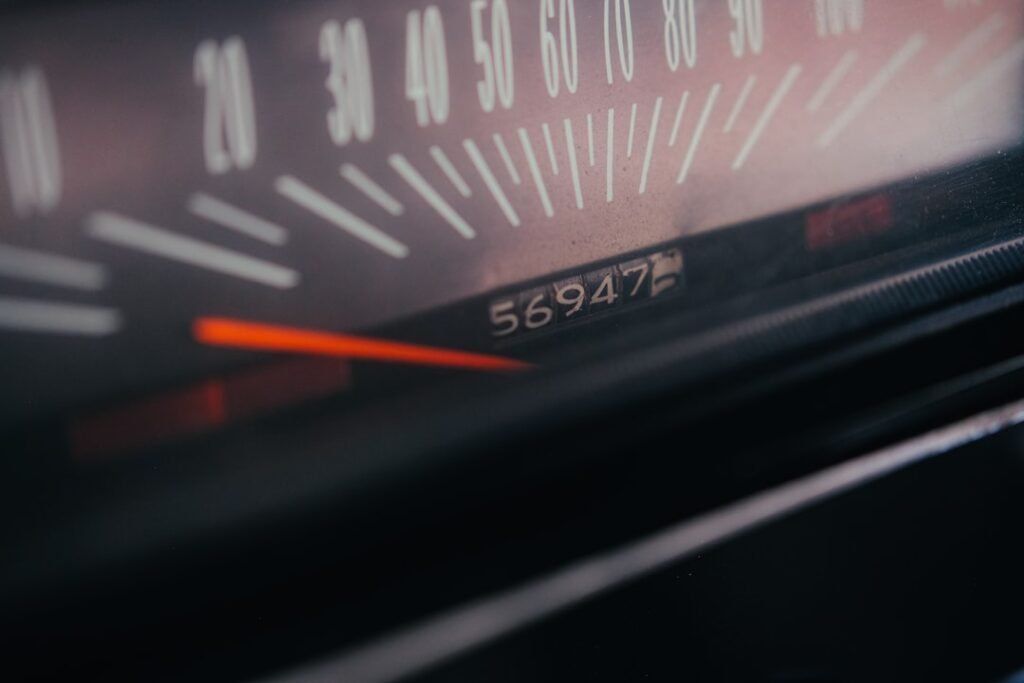
In August 2026 I pulled the first twenty organic results for the two searches an American actually runs before buying a used car — how many miles is too many for a used car and questions to ask when buying a used car — and classified all thirty-six domains that came back. Fifteen were car dealerships. Add the lenders, the credit unions, the insurer and the company that sells vehicle history reports, and twenty-one of thirty-six results belong to someone who makes money when the sale goes through. Exactly one result on either page was a government site.
So most published lists of questions to ask when buying a used car were written by the party you are supposed to be asking. That does not make them dishonest. It makes them soft: “has it ever been in an accident?” produces an answer with no consequence attached, and every list on those two pages is built out of that kind of question.
The nine below are different. Each one points at a document that already exists, or a statute that already applies, before you say a word. The tenth — how many miles is too many — is the one everybody types into Google, and it is the only one on this page that has no legal answer at all.
Who wrote the list you are reading
Here is the classification, position by position, from the two SERPs I pulled on 21 August 2026 (United States, desktop, depth 20):
| Type of result | how many miles is too many for a used car | questions to ask when buying a used car |
|---|---|---|
| Car dealership | 7 | 8 |
| Lender or credit union | 2 | 2 |
| Insurer | 1 | 0 |
| Sells vehicle history reports | 1 | 0 |
| Forum, social, video | 6 | 4 |
| Media, valuation, personal finance | 1 | 3 |
Government (.gov) | 0 | 1 |
| Organic results counted | 18 | 18 |
The single .gov result — the Federal Trade Commission, at position 7 on one of the two queries — is the one that matters, because the FTC did not just write advice. It wrote a rule that requires a form to be physically taped to the car before you are allowed to look at it. Almost none of the lists above the FTC mention that the form exists.
Questions 1–4: the ones a form on the window already answers
The Used Car Rule, 16 CFR part 455, has been in force since 1984. It requires a dealer to prepare, fill in and display a Buyers Guide on every used vehicle offered for sale. The FTC’s guidance for dealers is blunt about when: you must post it “before you display a vehicle for sale or let a customer inspect it for the purpose of buying it, even if the car is not fully prepared for delivery.”
It has to be readable from both sides, and it cannot be hidden: “A Guide in a glove compartment, trunk or under the seat is not conspicuous because it is not in plain sight.” It may come off for a test drive and must go straight back on afterwards. And per the FTC’s consumer page, “You’re also entitled to a Buyer’s Guide if you buy a used car online.”
What the form itself tells the buyer is, in the FTC’s own summary: the major mechanical and electrical systems and some of the major problems to look out for, whether the vehicle is sold “as is” or with a warranty, what percentage of repair costs the dealer will pay, “that oral promises are difficult to enforce”, to get all promises in writing, “to ask to have the car inspected by an independent mechanic before they buy”, to get a vehicle history report, to ask for a Spanish Buyers Guide if the sale is conducted in Spanish, and to keep the Guide after the sale.
That is already a checklist written by a federal agency and stapled to the windshield. Four questions come straight out of it.
1. “Can I have the Buyers Guide for this car?”
Not “can I see it”. Can I have it. The rule requires the dealer to give the buyer the final version of the window form. And there is a sentence in §455.3(b) that is worth more than the rest of this article put together:
The information on the final version of the window form is incorporated into the contract of sale for each used vehicle you sell to a consumer. Information on the window form overrides any contrary provisions in the contract of sale.
The FTC translates it for consumers: “if the Buyers Guide says the car comes with a warranty and the contract says the car is sold “as is,” the dealer must give you the warranty described in the Guide.” The form beats the contract. That is not negotiation, it is the rule.
2. “Which box is checked?”
There are only three states the form can be in, and they are not equivalent.
| Box on the Buyers Guide | What it means | Where it comes from |
|---|---|---|
| AS IS – NO DEALER WARRANTY | The dealer “won’t pay for any problems or needed repairs” and you assume the risk of anything that goes wrong after the sale | 16 CFR §455.2(b)(1)(i) |
| IMPLIED WARRANTIES ONLY | No promise to fix anything, but “implied warranties under your state’s laws may give you some rights to have the dealer take care of serious problems that were not apparent when you bought the vehicle” | §455.2(b)(1)(ii) — mandatory where state law limits or prohibits “as is” sales |
| WARRANTY (Full / Limited) | Named systems, a duration, and the percentage of parts and labor the dealer pays | §455.2(b)(2) |
The second row is the one to check first, because whether it is even available to the dealer depends on the state you are standing in. Where state law limits or prohibits “as is” sales, the rule says that state law “overrides this part and this rule does not give you the right to sell ‘as is.'” The heading is deleted from the form and replaced.
Two states are outside the federal rule entirely: “The Used Car Rule applies in all states except Maine and Wisconsin”, which run their own disclosure regimes. It does apply in the District of Columbia, Puerto Rico, Guam, the U.S. Virgin Islands and American Samoa.
What “as is” waives is the implied warranty — the unwritten promise that, in the FTC’s words, “the dealer promises the car will do what it’s supposed to do: it will run.” Where it survives, it is not unlimited: you have to “prove that the problem or defect existed at the time of the sale,” and coverage “can last as long as four years, although the length of the coverage varies from state to state.”
3. “Is what you just told me written on the form?”
Everything said out loud on a lot is worth nothing unless it lands on the Buyers Guide, and the rule goes further than that. It makes the contradiction itself a violation:
You may not make any statements, oral or written, or take other actions which alter or contradict the disclosures required by §§ 455.2 and 455.3.
So a verbal promise that the dealer will fix the air conditioning is not merely unenforceable. If it contradicts the form, it is prohibited. The FTC’s advice is to make sure any verbal promise — to repair the car, to cancel the sale if you are not satisfied — is written on the Buyers Guide, “Otherwise, you may have a hard time getting the dealer to follow through.”
4. “If I buy the service contract, what does it switch back on?”
A service contract is not a warranty; it is a separate paid product, and the FTC lists eight things worth checking before buying one. But there is a timing rule almost nobody knows, and it is genuinely valuable on an “as is” car:
If you buy a service contract from the dealer within 90 days of buying a used car, the dealer can’t remove implied warranties on the systems covered in the contract.
Buy an engine service contract inside 90 days on a car sold “as is”, and the implied warranty on the engine comes back — “These warranties may give you protection beyond the scope of the service contract.” Outside that window, it does not.
Question 5: “Does this rule cover this seller and this car at all?”
This is the question that decides whether questions 1 to 4 exist. Three separate definitions in §455.1(d) can switch the whole rule off, and each of them is a real, common situation.
The seller. “Dealer means any person or business which sells or offers for sale a used vehicle after selling or offering for sale five (5) or more used vehicles in the previous twelve months.” Below five, there is no Buyers Guide duty. The private seller on a classified ad has no obligation to post anything, which is the concrete difference between a private sale and a lot — not price, paperwork.
The vehicle. “Vehicle means any motorized vehicle, other than a motorcycle, with a gross vehicle weight rating (GVWR) of less than 8500 lbs., a curb weight of less than 6,000 lbs., and a frontal area of less than 46 sq. ft.” Read it as a set of ceilings, and note what sits above them:
| Situation | Buyers Guide required? |
|---|---|
| Sedan, SUV or light truck from a dealer | Yes |
| The same car bought online from that dealer | Yes |
| Heavy-duty pickup or large van over 8,500 lbs GVWR | No — outside the definition of “vehicle” |
| Motorcycle | No — excluded by name |
| Agricultural equipment | No — listed exception |
| Sold for scrap or parts with a salvage certification | No — listed exception |
| Private seller, fewer than five vehicles in twelve months | No — not a “dealer” |
| Public auction open to consumers | Yes — dealer and auction company both |
| Auction closed to consumers | No |
| Maine and Wisconsin | State version instead |
The heavy-pickup line is the one that surprises people, and it is checkable in ten seconds. The GVWR is printed on the certification label that 49 CFR §567.4 requires on the “hinge pillar, door-latch post, or the door edge that meets the door-latch post, next to the driver’s seating position”. If that label reads above 8,500 pounds, the federal rule protecting the compact car parked alongside does not reach this one.
Questions 6–8: the only number the seller must certify in writing
Everything about a used car is an opinion except one number. The odometer reading is disclosed under a federal statute, on a federal form, with a criminal penalty attached, and it is absent from every page on those two searches that I was able to read.
Under 49 U.S.C. §32705 and 49 CFR part 580, the person transferring the vehicle must give the buyer a signed written disclosure containing the odometer reading at the time of transfer, the date, both parties’ printed names and addresses, and the vehicle’s make, model, year, body type and VIN. The document also has to carry “a statement referencing federal law and stating failure to complete the disclosure or providing false information may result in fines and/or imprisonment.”
6. “Which of the three statements did the previous owner sign?”
The transferor does not just write a number. They pick one of three certifications, and only one of them is good news:
| Certification | Regulation | What it tells you |
|---|---|---|
| The reading reflects the actual mileage | 49 CFR §580.5(e)(1) | The normal case |
| The mileage exceeds mechanical limits | §580.5(e)(2) | A five-digit odometer that has rolled over |
| The reading does not reflect the actual mileage | §580.5(e)(3) | The title is branded; the regulation requires “a warning notice to alert the transferee that a discrepancy exists” |
That third box follows the car forever. Asking which one is checked is a thirty-second question with a documented answer, and it is the difference between a mileage figure that means something and one that legally “should not be relied upon.”
7. “Can I see the odometer disclosure you took in on this car?”
This is the question I would ask first, and I could not find it on the results above. Of the thirty-six organic URLs, twenty-one answered a plain fetch on 21 August 2026 and twelve served a readable article body. Not one of the twelve mentions the odometer disclosure statement, and not one names the Used Car Rule or cites 16 CFR. Three mention the Buyers Guide — and one of the three is the FTC’s own page.
When a dealer takes a car in, federal law does not let them be casual about the paperwork: “A person acquiring a motor vehicle for resale may not accept a written disclosure under this section unless it is complete.” And having accepted it, they have to keep it. §580.8 requires dealers and distributors to retain a copy of “each odometer mileage statement, which they issue and receive” for five years, at their primary place of business, in an order that permits systematic retrieval.
So on a normal dealer-stocked used car, the previous owner’s signed, dated, certified odometer statement exists, is complete by law, and is filed somewhere retrievable within a five-year window. Auction companies keep their own version: §580.9 requires them to retain, for five years, the previous owner’s name, the buyer’s name, the VIN, and “the odometer reading on the date which the auction company took possession of the motor vehicle.”
A dealer who produces it in two minutes has told you something. A dealer who cannot has told you something too.
8. “Is this car still inside the federal disclosure window?”
Here is the exemption almost nobody mentions, and it was rewritten in 2019 in a way that matters now.
Odometer disclosure is not required forever. §580.17 exempts a vehicle from model year 2010 or earlier once it is transferred at least ten years after 1 January of its model year — and a vehicle from model year 2011 or later only after twenty years. The regulation spells out both with its own examples: “For vehicle transfers occurring during calendar year 2020, model year 2010 or older vehicles are exempt” and “For vehicle transfers occurring during calendar year 2031, model year 2011 or older vehicles are exempt.”
| Car you are looking at in 2026 | Federal odometer disclosure required on transfer? |
|---|---|
| Model year 2009 or 2010 | No — already past the ten-year rule for pre-2011 vehicles |
| Model year 2011 | Yes, until calendar year 2031 |
| Model year 2016 | Yes, until calendar year 2036 |
| Model year 2020 | Yes, until calendar year 2040 |
| Anything over 16,000 lbs GVWR | No — §580.17(a)(1) |
The practical reading: a fifteen-year-old bargain car may legally change hands with no federal mileage certification at all, while the 2011 parked beside it carries one for another five years. On the exempt car, the odometer is a number on a dashboard and nothing more.
What the number is worth: the penalty for lying about it
The reason the odometer disclosure is the strongest document in the transaction is what sits behind it. The current, inflation-adjusted civil penalties are in 49 CFR §578.6(f), and they are not the $10,000 figure printed in the statute:
- $13,676 per violation, and “A separate violation occurs for each motor vehicle or device involved in the violation”, up to $1,364,624 for a related series of violations.
- With intent to defraud, liability to the buyer of “three times the actual damages or $13,676, whichever is greater” — a private right of action under 49 U.S.C. §32710, which must be brought within two years and where “The court shall award costs and a reasonable attorney’s fee to the person when a judgment is entered for that person.”
- Criminally, under §32709(b), a knowing and willful violation means being “fined under title 18, imprisoned for not more than 3 years, or both.”
The tampering statute reaches further than most people assume. Under §32703 it is prohibited not only to alter an odometer or sell a device that does, but to “operate a motor vehicle on a street, road, or highway if the person knows that the odometer of the vehicle is disconnected or not operating” with intent to defraud. Driving it is the offense.
Question 9: “Can I take it to my own mechanic first?”
The FTC’s position on vehicle history reports is more pointed than the dealership blogs let on:
A vehicle history report is not a substitute for an independent vehicle inspection. A vehicle history report may list accidents and flood damage, but typically it will not list mechanical problems.
And “A mechanical inspection is different from a safety inspection. Safety inspections usually only focus on things that make a car unsafe to drive.” A report tells you about events that got recorded. An inspection tells you about the car in front of you.
Three details from the FTC’s advice are worth copying exactly:
- If the dealer will not release the car, look for a mobile inspection service that will come to the lot, or ask the dealer to bring it to a facility you choose. “If a dealer won’t allow an independent inspection, consider going to another dealer.”
- “Ask the mechanic for a written report with a cost estimate for all necessary repairs. Be sure the report includes the car’s make, model, and VIN.”
- Use the estimate as a price argument. That is the FTC’s own suggestion, not a negotiating trick.
An inspection is also worth doing on a certified car sold with a warranty; the FTC says so explicitly. And if a manufacturer’s warranty is still running, ask for the warranty documents and verify what is covered and when it expires by calling the dealership with the VIN in hand.
The tenth question, and why it has no legal answer
Now the one everybody actually searches: how many miles is too many for a used car. The AI Overview sitting above the results on 21 August 2026 answered it like this: “150,000 to 200,000 miles is generally considered the upper ceiling for most vehicles”, and “averaging 10,000 to 15,000 miles per year is standard.” The second half is the part to be careful with, because it quietly swaps two different statistics.
The Federal Highway Administration publishes both. In Table VM-1 of Highway Statistics 2023, the average miles traveled per vehicle in a year is:
| Category (FHWA, 2023) | Average miles per vehicle |
|---|---|
| Light-duty vehicles, short wheelbase | 11,026 |
| Light-duty vehicles, long wheelbase | 11,360 |
| All light-duty vehicles | 11,106 |
| All motor vehicles | 11,408 |
The 10,000–15,000 figure is a per-driver number, and as one it is roughly right: total travel in 2023 was 3,246,817 million vehicle-miles against 237,655,885 licensed drivers in Table DL-1C, or about 13,700 miles per driver per year. But an odometer counts what a vehicle did, not what a person did — and the same two tables show 284,614,269 registered motor vehicles against those 237,655,885 drivers. There are roughly forty-seven million more vehicles than there are people licensed to drive them, and the extra miles-per-driver have to come from somewhere. Judge an odometer against the driver number and you will read every used car as lower-mileage than it is.
Run it against the vehicle number instead and the arithmetic changes:
| Age of the car | FHWA-average odometer | What the SERP would call it |
|---|---|---|
| 3 years | ~33,000 | Low mileage |
| 5 years | ~55,000 | Low mileage |
| 8 years | ~88,000 | Approaching “high mileage” |
| 10 years | ~110,000 | “High mileage” |
| 14.5 years | ~160,000 | “Too many” |
That last row is the average age of a passenger car on American roads: S&P Global Mobility put the average light vehicle at 12.8 years in its May 2025 analysis, with passenger cars averaging 14.5 years. In other words, the mileage the search results call the ceiling is roughly what an average car reaches by the end of an average life. It is where an average car ends up, not an outlier.
Federal regulation is not shy about that number either. Under 40 CFR §86.1805-17, emission standards apply for a useful life of 15 years or 150,000 miles for LDT2, HLDT, MDPV and heavy-duty vehicles, and 10 years or 120,000 miles for light-duty vehicles and LDT1, with manufacturers free to certify to the longer figure. The mileage the internet calls a ceiling is the floor of the durability demonstration the EPA requires for an SUV or a light truck.
So the honest version of the answer:
- Mileage is a ratio, not a number. Miles divided by age, compared against roughly 11,000 a year, tells you far more than the odometer alone.
- What produced the miles matters more than how many. Steady highway miles and stop-start city miles are not the same wear, which is why manufacturers publish severe-service schedules against driving conditions rather than one number — I went through two of them in detail in the piece on the car maintenance schedule. The same split shows up in fuel: the EPA figures behind the cars with the best gas mileage are city and highway numbers precisely because those two kinds of miles are different.
- On an electric car, the question is years and climate, not miles. fueleconomy.gov, run by the Department of Energy and the EPA, states that “a DOE study suggests these batteries may last 12 to 15 years in moderate climates and 8 to 12 years in severe climates” — a calendar-and-heat problem, not an odometer one.
- The documented car wins. A 120,000-mile car with a complete service history and a clean “actual mileage” certification is a better bet than a 70,000-mile car with neither. That is not an opinion. It is what every warranty and service contract argument turns on.
- Which badge it wears moves the needle less than reputation suggests. I went through the four big reliability studies for the most reliable car brands and they crowned four different winners.
One number for context while you negotiate. Using the Bureau of Labor Statistics CPI series for used cars and trucks, CUUR0000SETA02, July 2019 to July 2026 is +29.4% — very slightly below the 30.1% of the all-items index over the same seven years, and well under the 55.8% that the maintenance and repair index ran up in the same period. Used cars are also 13.6% below their July 2022 level, the highest monthly reading of that series since 2017. The car got relatively cheaper. Keeping it did not, which is why the number worth budgeting against is not the sticker but your own cost per mile.
The same nine questions, from the other side
Everything above flips the moment you sell. You become the transferor: the person who signs the odometer certification under §580.5, whose signature carries the “fines and/or imprisonment” warning, and who is exposed to the treble-damages action if the number is wrong. You are also the one whose price depends on being able to prove what you are claiming.
Which is a records problem, not a mechanical one. What holds up is dull and specific: the odometer reading over time, every service with a date and a mileage, the receipts, and the fuel history that shows how the car was actually used. I have written separately about the car maintenance log and about how to evaluate a used car through its usage data, and about the real costs and scams to check before buying.
That record is exactly what I built Magica to keep. Fuel and charging logged per vehicle, every service recorded with what it cost, receipts scanned and kept with the car instead of in a drawer, scheduled deadlines with advance notifications, and reports — maintenance cost and frequency, consumption trends — that export to PDF when someone asks you to prove it. It runs on iPhone and Android, and everything stays on the device: no account, no server of mine holding your mileage. That last part is an architecture decision, not a marketing promise.

Try Magica for Free
Download the app and start automatically tracking your business trips. No credit card required.
Download Now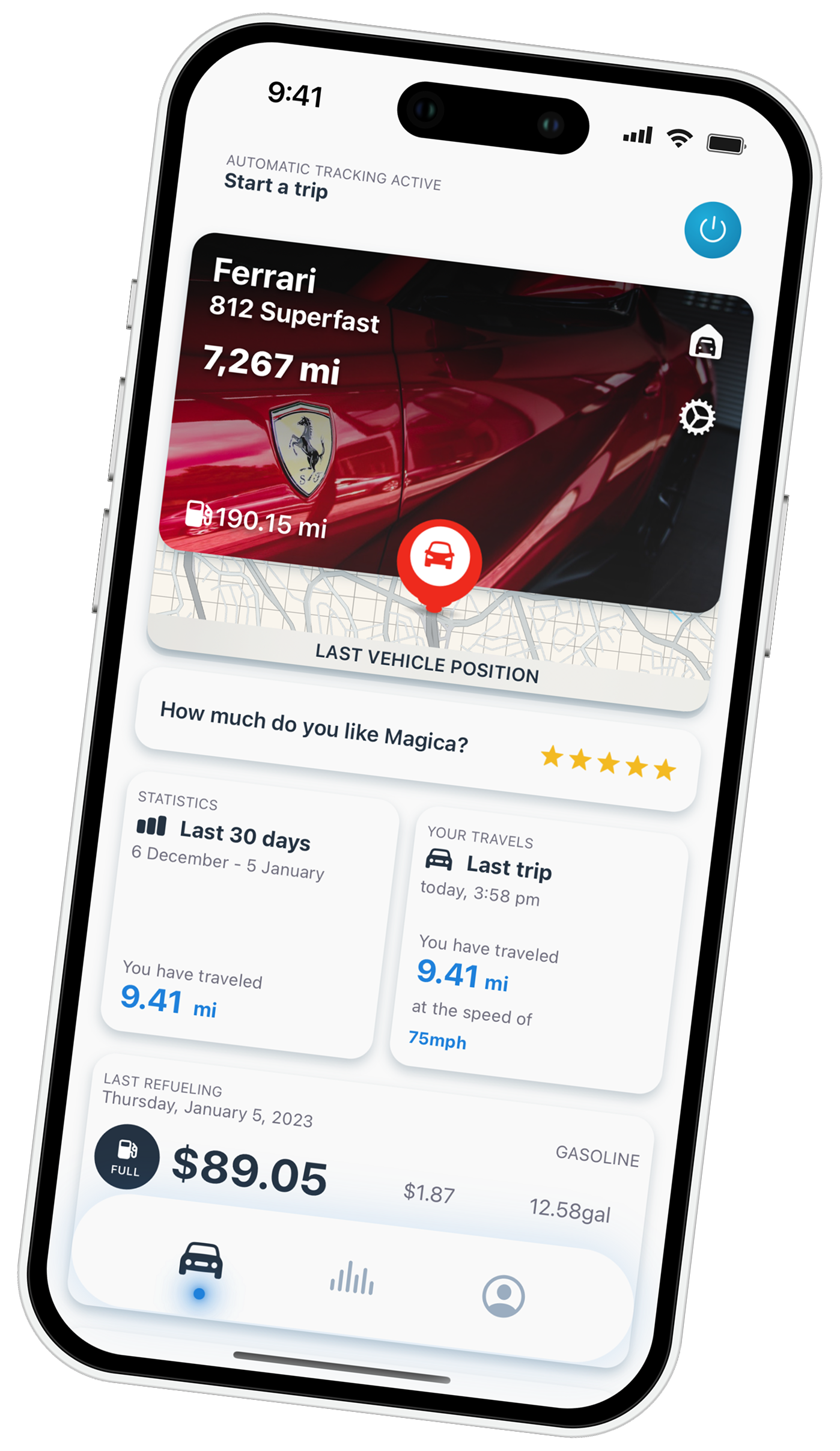
Frequently asked questions
What is the $3,000 rule for cars?
It is an internet budgeting heuristic, not a rule. Nothing by that name appears anywhere in the federal law that governs used-car sales — not in 16 CFR part 455, not in 49 U.S.C. chapter 327, not in 49 CFR part 580. Treat it the way you would treat any other rule of thumb without a source behind it.
Is 200,000 miles bad for a used car?
Not automatically, and the framing is wrong. Against the FHWA’s 11,026 average annual miles for a light-duty vehicle, 200,000 miles is roughly eighteen years of average use: high, but the EPA’s own useful-life requirement already runs to 150,000 miles for light trucks, SUVs and heavy-duty vehicles, and 120,000 for cars. That same 11,026 figure is what shows the resale-value rankings to be quoting one specific level of use, since they are computed at 15,000 miles a year — the arithmetic is in best cars for resale value. What decides it is the ratio of miles to age, what kind of miles they were, and whether there is a service record. A documented 200,000-mile car and an undocumented one are not the same purchase.
What is a good mileage for a used car?
Roughly 11,000 miles per year of age, using the FHWA per-vehicle figure, is the honest midpoint — about 55,000 on a five-year-old car and 110,000 on a ten-year-old one. Anything meaningfully under that is genuinely low mileage. Anything over it needs an explanation, and “highway commute” is a good one.
Does the dealer have to give me a Buyers Guide if I buy online?
Yes. The FTC states that “You’re also entitled to a Buyer’s Guide if you buy a used car online.” The Used Car Rule attaches to the dealer and the vehicle, not to the showroom floor.
What happens if the Buyers Guide and the sales contract disagree?
The Guide wins. Under 16 CFR §455.3(b), the information on the final window form is incorporated into the contract of sale and “overrides any contrary provisions in the contract of sale.” If the Guide promises a warranty and the contract says “as is”, the FTC’s position is that the dealer must give you the warranty described in the Guide.
Does a private seller have to give me anything in writing?
Not a Buyers Guide — the Used Car Rule only reaches a seller who has sold or offered five or more used vehicles in the previous twelve months. The odometer disclosure is different: 49 U.S.C. §32705 applies to transfers generally, so unless the vehicle is exempt under §580.17, a private seller still owes you a signed mileage certification.
Is the odometer disclosure required on an older car?
Only inside the federal window. A model year 2010 or earlier vehicle is exempt once it is more than ten years past 1 January of its model year, so in 2026 those transfers carry no federal disclosure. A model year 2011 or later vehicle stays covered for twenty years — the 2011 stops being covered in 2031.
Can I ask for the Buyers Guide in Spanish?
Yes, and the dealer must post it, not merely provide it on request: if the sale is conducted in Spanish, 16 CFR §455.5 requires the Spanish window form and the Spanish contract disclosures, with the wording set out in the rule.
—
This article explains what United States federal agencies publish about buying a used car. It is not legal advice for a specific transaction: state law adds requirements the federal rules do not cover, two states run their own version of the Used Car Rule, and a specific dispute belongs with a lawyer or your state attorney general’s office. Sources: 16 CFR part 455 and 49 CFR parts 578 and 580 (eCFR, current as of 1 August 2026), 49 U.S.C. §§32703, 32705, 32709 and 32710, FTC consumer advice “Buying a Used Car From a Dealer” and the FTC “Dealer’s Guide to the Used Car Rule”, 40 CFR §86.1805-17, 49 CFR §567.4, FHWA Highway Statistics 2023 tables VM-1 and DL-1C, fueleconomy.gov (U.S. DOE / EPA), S&P Global Mobility (May 2025), Bureau of Labor Statistics CPI series CUUR0000SETA02, CUUR0000SETA01, CUUR0000SETD and CUUR0000SA0. SERP classification: DataForSEO, United States desktop, 21 August 2026. Data accessed 21 August 2026.




3 commenti su “Questions to Ask When Buying a Used Car: the Nine With a Legal Answer”
I commenti sono chiusi.